Land & Water · Tacna · Southern PeruPublished 22 August 2026
Why Is the Peruvian Botija Olive Black?
The characteristic dark Peruvian olive is not simply a different-colored version of the familiar Spanish green table olive. Ripeness, cultivar, and curing all matter.
Put a familiar Spanish green table olive beside a characteristic Peruvian black olive and the difference looks almost too obvious to require explanation.
One is green.
The other can be deep purple-brown or nearly black, larger, softer, and much more assertive.
It is tempting to assume that they are simply different species of olive.
They are not.
The interesting answer lies in the interaction between variety, maturity, and processing.
The short answer
Peru's characteristic black table olive is dark because it is harvested at a later stage of ripeness.
The protected Aceituna de Tacna includes olives identified as Sevillana del Perú or Criolla, and the official denomination recognizes green, mulata, and black forms.
The fruit does not begin black.
As olives mature, their color changes. Green gives way through intermediate shades toward purple and black.
Harvesting mature fruit is therefore one important part of the explanation.
But it is not the whole explanation.
An olive cannot normally be eaten straight from the tree. Its natural bitterness has to be reduced through processing. The way the fruit is cured affects texture, flavor, salt, acidity, and the experience of eating it.
The black Peruvian olive is the product of both the tree and what happens after harvest.
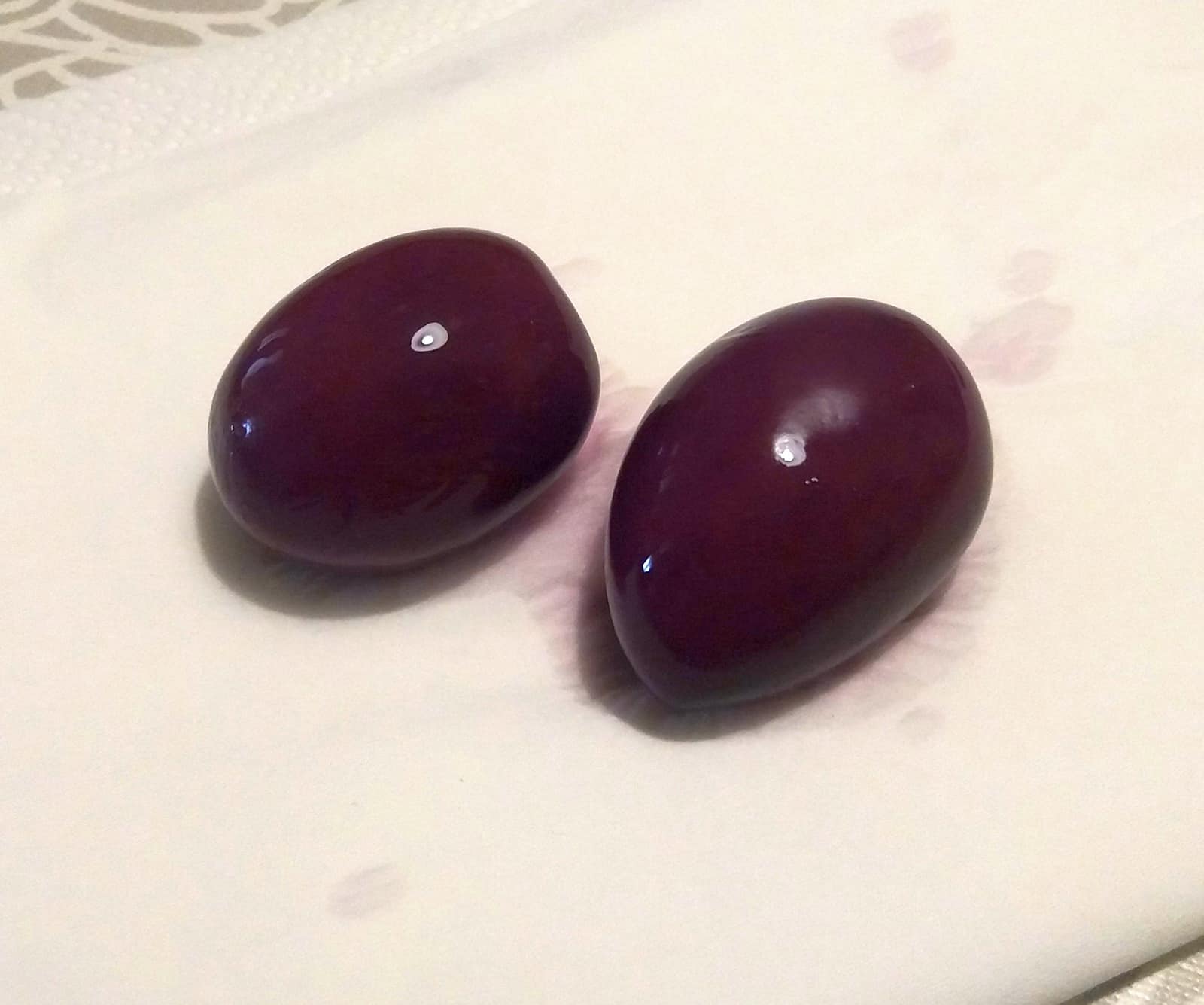
Aceituna de botijaMiguelAlanCSCC BY-SA 4.0
Green and black are not necessarily different cultivars
This is one of the easiest distinctions to miss.
Color alone does not identify an olive variety.
The same cultivar can produce fruit harvested at different stages of maturity.
Peru's protected Tacna designation makes that explicit: Sevillana del Perú, also called Criolla, can appear as green, mulata, or black olives.
That means “black olive” describes an important condition of the fruit, but not by itself its genetic identity.
The olive has matured farther before harvest.
This is also why comparisons between a Peruvian black olive and a Spanish green table olive can accidentally combine several variables at once.
The fruits may differ in cultivar.
They differ in maturity.
They may also differ substantially in curing method.
An olive is processed before it becomes table food
Raw olives contain bitter compounds, particularly oleuropein, that make most freshly harvested fruit unpleasant to eat.
Table-olive traditions developed different ways of dealing with that bitterness.
The International Olive Council distinguishes several major processing families.
The familiar Spanish or Sevillian-style green olive is generally harvested before full ripeness and commonly treated with an alkaline solution before fermentation in brine.
Naturally black olives are harvested nearer full maturity and can be placed directly into brine to undergo fermentation without the same initial lye treatment.
Those processes do not merely preserve the fruit.
They change it.
Texture, bitterness, acidity, aroma, and flavor all emerge partly from decisions made after harvest.
So when two olives taste surprisingly different, biology is only part of the answer.
Why “Sevillana” is especially interesting in Peru
One of Peru's principal table-olive cultivars carries a conspicuously Spanish name: Sevillana del Perú.
It is also known as Criolla.
The names are historically suggestive.
They are not genetic proof.
A 2025 genomic study of olive cultivars in southern Peru includes Sevillana among the country's cultivated material and provides a much stronger baseline for studying relationships among Peruvian olive populations.
What it does not establish is a simple equation between today's Peruvian Sevillana and a modern cultivar in Spain merely because they share a name.
Five centuries of propagation, selection, movement, and local cultivation sit between the first colonial introductions and a contemporary grove.
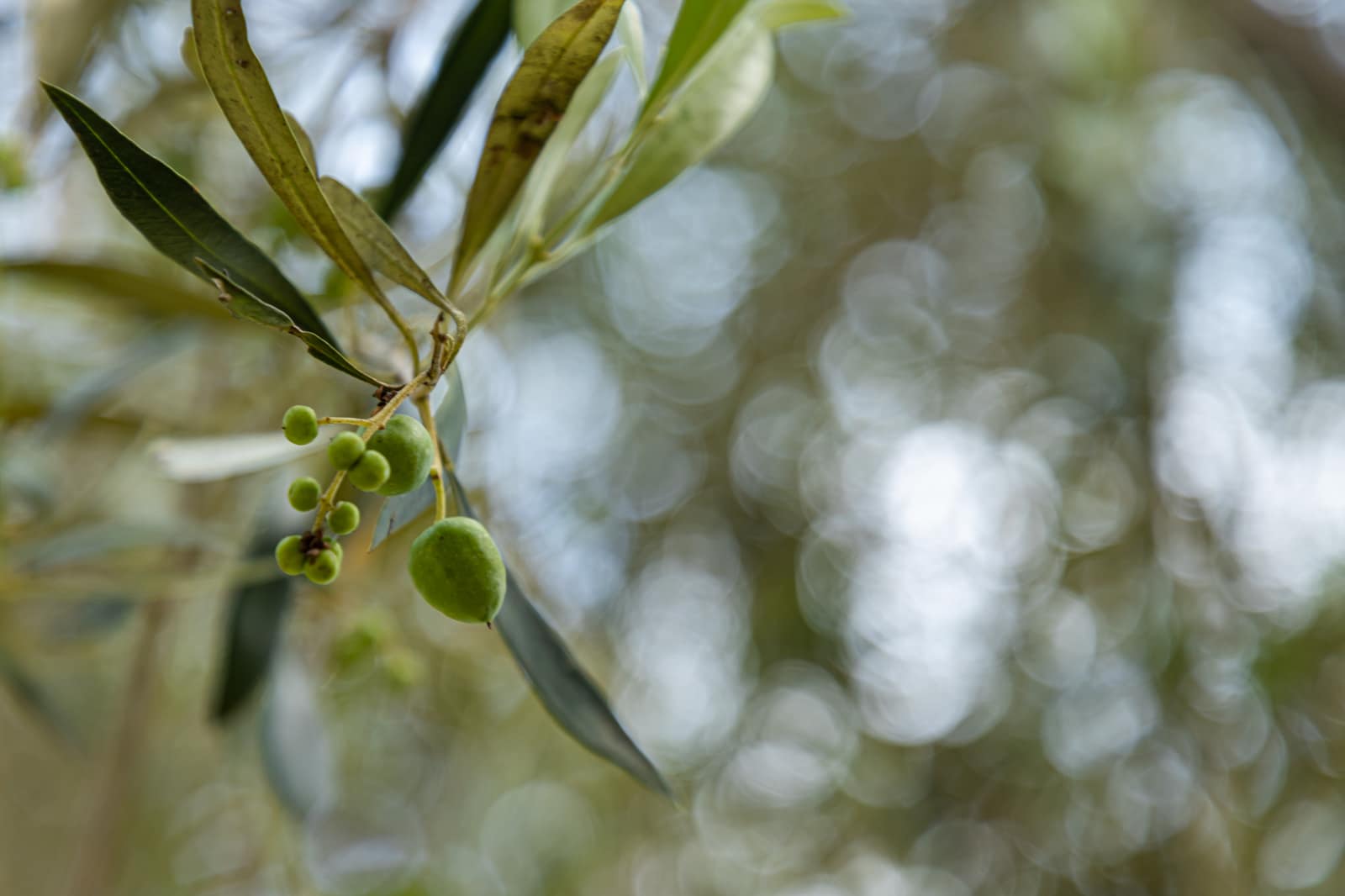
Olive fruit in El OlivarGuillermo Carlos GómezCC BY-SA 4.0
The historical and biological lineages have to be investigated rather than inferred from vocabulary.
And what exactly is a botija?
This is where another apparently simple word becomes slippery.
Historically, a botija was a ceramic vessel.
Such containers were widely used in the Spanish world for storage and transport, including food products.
Colonial evidence from Peru describes olives sold seasoned or preserved in botijas, and records also place olives and olive oil moving through commercial networks in these vessels.
That creates an appealing explanation for the modern phrase aceituna de botija: perhaps the olive took its name from the container in which it was preserved or traded.
It may have.
The project has not yet established that lexical transition securely enough to present it as fact.
For now it is better to distinguish three things:
Botija as vessel: historically documented.
Olives preserved and traded in botijas: historically documented.
The modern olive name directly descending from that use: plausible, but still under investigation.
The distinction is small but important.
A good story is not automatically an etymology.
Peru became a table-olive country
The modern production pattern adds another layer.
According to the International Olive Council, roughly 80 percent of Peru's olive production is oriented toward table olives rather than olive oil.
That ratio matters because it helps explain why the olive entered Peruvian culinary life in a different form from the one that dominates many contemporary ideas about Mediterranean eating.
Peru does produce olive oil, including oils of high quality.
But the country's olive economy and everyday olive visibility have developed strongly around the fruit itself.
The black table olive is therefore not an incidental local curiosity.
It is one expression of a much larger Peruvian olive culture.
What we can say with confidence
Peru's characteristic black olive is not black because it belongs to a separate black-olive species.
Olive color changes with ripeness.
Important Peruvian cultivars including Sevillana del Perú or Criolla are harvested in multiple maturity classes, including green, mulata, and black.
Black fruit is harvested later.
Processing matters as well. Natural black olives and Spanish-style green olives generally follow different curing pathways, which contributes to substantial differences in flavor and texture.
Peru's olive sector is strongly oriented toward table olives.
All of those factors help explain why the characteristic Peruvian olive can look and taste so different from the small green olive many people associate with Spain.
What remains uncertain
What is the precise genetic relationship between Peruvian Sevillana or Criolla and historical Spanish olive material?
Modern genomic work is beginning to provide the tools to answer this, but names alone are insufficient.
When did “botija” become the name of an olive rather than only the vessel associated with storage and transport?
Still unresolved.
How much of the characteristic sensory difference comes from cultivar versus maturity versus curing?
The mechanisms are known in general, but a rigorous direct comparison of the olives represented in this project would require matched producer information and comparative tasting.
Those are different questions.
Keeping them separate is more useful than collapsing all of them into the color of the fruit.
Source trail
Institutional sources
INDECOPI, Denominación de Origen Aceituna de Tacna.
The protected designation identifies Sevillana del Perú or Criolla and recognizes green, black, and mulata forms.
INDECOPI, Denominación de Origen Aceituna de Tacna
International Olive Council, Table Olives.
Technical overview of major curing methods, including Spanish-style green olives and naturally black olives.
International Olive Council, Table Olives
International Olive Council, Peru sector overview.
Current context for Peru's strong orientation toward table-olive production.
IOC cooperation with Peru’s olive sector
Scientific research
Casilla García et al., “Genetic Diversity of Olive Cultivars Assessed by Genotyping-by-Sequencing in Southern Peru” (2025).
Contemporary genomic analysis of cultivated olive material in southern Peru, including Sevillana.
Historical research
Miguel Molina Martínez, “El cultivo del olivo en la América colonial. Propuestas de investigación” (2015).
Includes colonial evidence concerning preserved olives, botijas, and the early Peruvian olive economy.
Research status
The relationship between the historical ceramic botija and the modern culinary name aceituna de botija remains an active research question.
This page will be updated if documentary evidence establishes the lexical connection more precisely.
About sourcing, uncertainty, and corrections: Research Standards