From Oscar Trelles, author of The Human OS Manual
Before It
Was a Diet
The Olive Tree’s Five-Hundred-Year Journey Through Empire, the Mediterranean, and Health
A five-hundred-year journey following the olive from Andalucía to Peru, and the Mediterranean diet from lived foodway to global prescription.
What produces a diet before anyone chooses what to eat?
Publishing September 2027 from Ten & Walker Press
Lima
In Lima, the path bends. The trees do not.
In El Olivar, a modern city park winds through centuries-old olive trees. But look past the paths and the trees begin to resolve into straight lines.
Agricultural lines.
They recalled another landscape: the hills around Jaén, in Andalucía, where olive trees extend across the terrain in an enormous geometric matrix.
The resemblance opened a question that eventually crossed five centuries.
Jaén, Andalucía
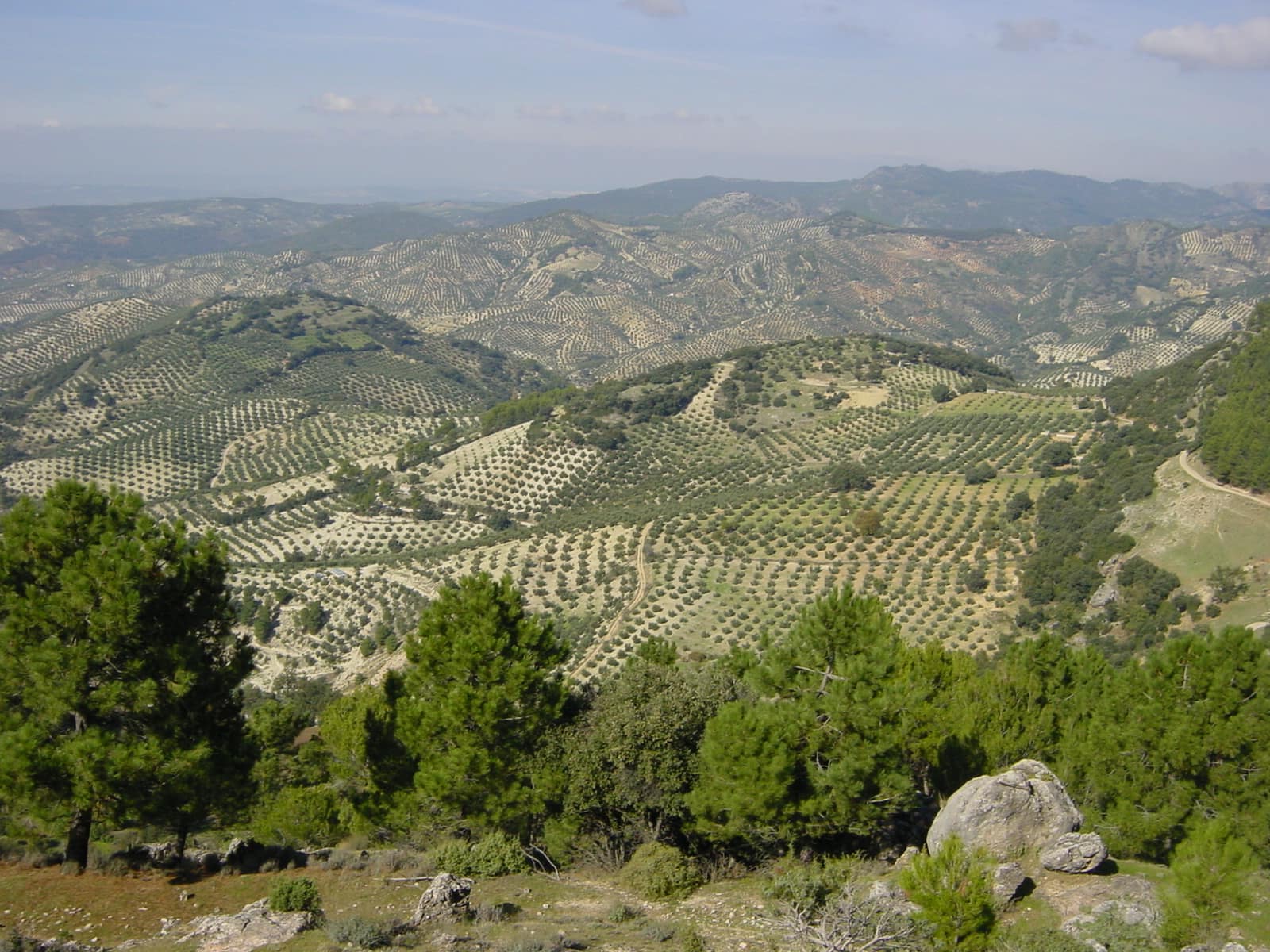
Olive groves in Baños de la Encina, JaénAllie_CaulfieldCC BY 2.0
The grove is the landscape.
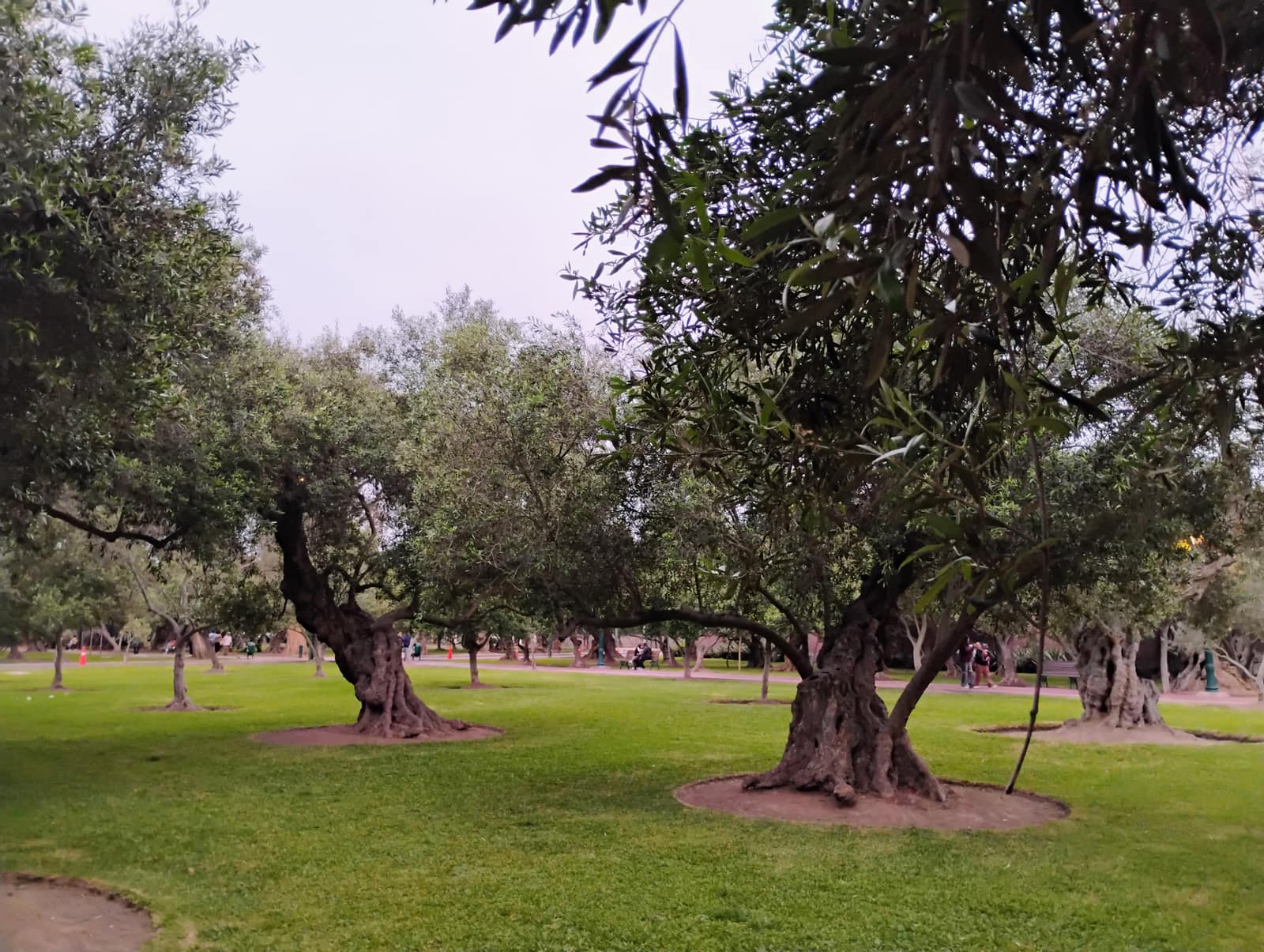
El Olivar, San Isidro, LimaCarlo BresciaCC BY-SA 4.0
The landscape became the city.
Long before olive oil became health advice, the olive itself had already made another journey.
Spain carried the olive tree across the Atlantic nearly five centuries ago.
In Peru, it survived. It adapted. It became productive. It developed distinctive local forms and found a place in Peruvian food.
One tree. Five centuries.
Andalucía to Lima, sixteenth-century Spanish sea laneNatural Earth (public domain base data)
01
Andalucía
A tree, an agricultural landscape, and the conditions that made both possible.
02
Across the Atlantic
Cuttings, ships, imperial routes, and the difficulty of keeping a living thing alive in transit.
03
Peru
A foreign organism enters an older landscape of irrigation, agricultural knowledge, labor, landholding, markets, and taste.
Why Are El Olivar’s Olive Trees Still Planted in Straight Lines?
04
Adaptation
The olive takes root, but not as a copy.
Centuries later, something else began moving outward from the Mediterranean.
Researchers observed food, daily life, and health in Mediterranean places. They measured what people ate, compared populations, and studied the patterns.
Those observations were eventually translated into widely recognizable health advice: the Mediterranean diet.
The pattern has empirical value.
What happens when a way of life becomes advice?
What would have to be true around us for the healthier choice to become the ordinary one?
Trace the behavior upstream.
The investigation
Each note begins with something concrete: a tree, a map, a household survey, a shipping route, a line in the landscape.
The notes stay with the evidence, the gaps, and the questions still open. The manuscript is where those pieces become a story.
Movement & Power
How Did the Olive Tree Reach Peru?
The evidence behind Antonio de Ribera, more than one hundred olive cuttings from Seville, and the details the archive has not yet resolved.
Land & Water
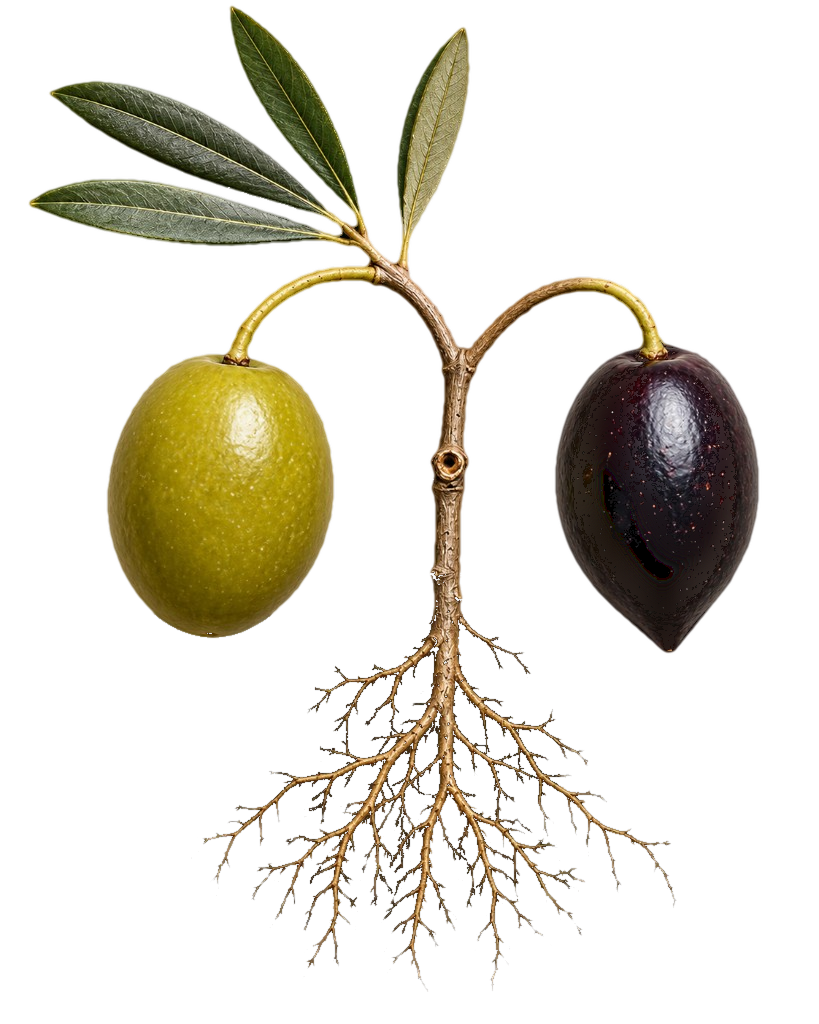
Why Is the Peruvian Botija Olive Black?
Ripeness explains the color. Cultivar and curing explain why the answer is more interesting than that.
Land & Water
Why Are El Olivar’s Olive Trees Still Planted in Straight Lines?
A modern park still contains the agricultural geometry of the grove that came before it.
Movement & Power
Was Spain Part of the Seven Countries Study?
Spain was absent from the formal cohorts but present in earlier exploratory surveys. The distinction matters when tracing Mediterranean-diet history.
Land & Water
Are Botija and Kalamata Olives the Same?
Both can be dark table olives, but their names identify different things. A careful comparison begins with cultivar, provenance, and processing.
Movement & Power
What Did the 1948 Crete Food Survey Record?
A household survey recorded food in postwar Crete before the Seven Countries Study. Its dates, sample, and methods define what it can tell us.
Currently investigating
Some questions are answered here. Others are still being followed.
The first cuttings
Where, exactly, did Antonio de Ribera obtain the olive cuttings he brought from Spain to Peru?
Garcilaso points to Seville. The more specific Aljarafe provenance is still being traced through earlier sources.
Water beneath El Olivar
What irrigation system supported the grove before San Isidro became a city?
Historical research establishes that older irrigation traces influenced the urban transformation. The network itself still needs to be reconstructed.
Why Are El Olivar’s Olive Trees Still Planted in Straight Lines?
Before there was a diet
How did observations of food and health in places such as Crete become the portable model now called the Mediterranean diet?
The investigation is moving backward from later dietary models toward the household surveys, researchers, and decisions that preceded them.
Research status · August 2026
Read before publication
We are assembling the first group of readers who will encounter Before It Was a Diet before publication. Some will help test the manuscript as it develops. Others may receive the finished advance edition ahead of the September 2027 release.
Selection is limited.
Follow the investigation
Follow the research as the book takes shape. Field notes, archival discoveries, maps, essays, and publication updates.
No diet tips. No serialized chapters.
Oscar Trelles
Oscar Trelles is a Peruvian American author based in Andalucía, and the author of The Human OS Manual.
Before It Was a Diet grew from two landscapes he knew: the old olive grove of El Olivar in Lima, and the olive hills of southern Spain.